
Ridge repointing and
re-bedding across
Hampshire in Hook & surrounding areas
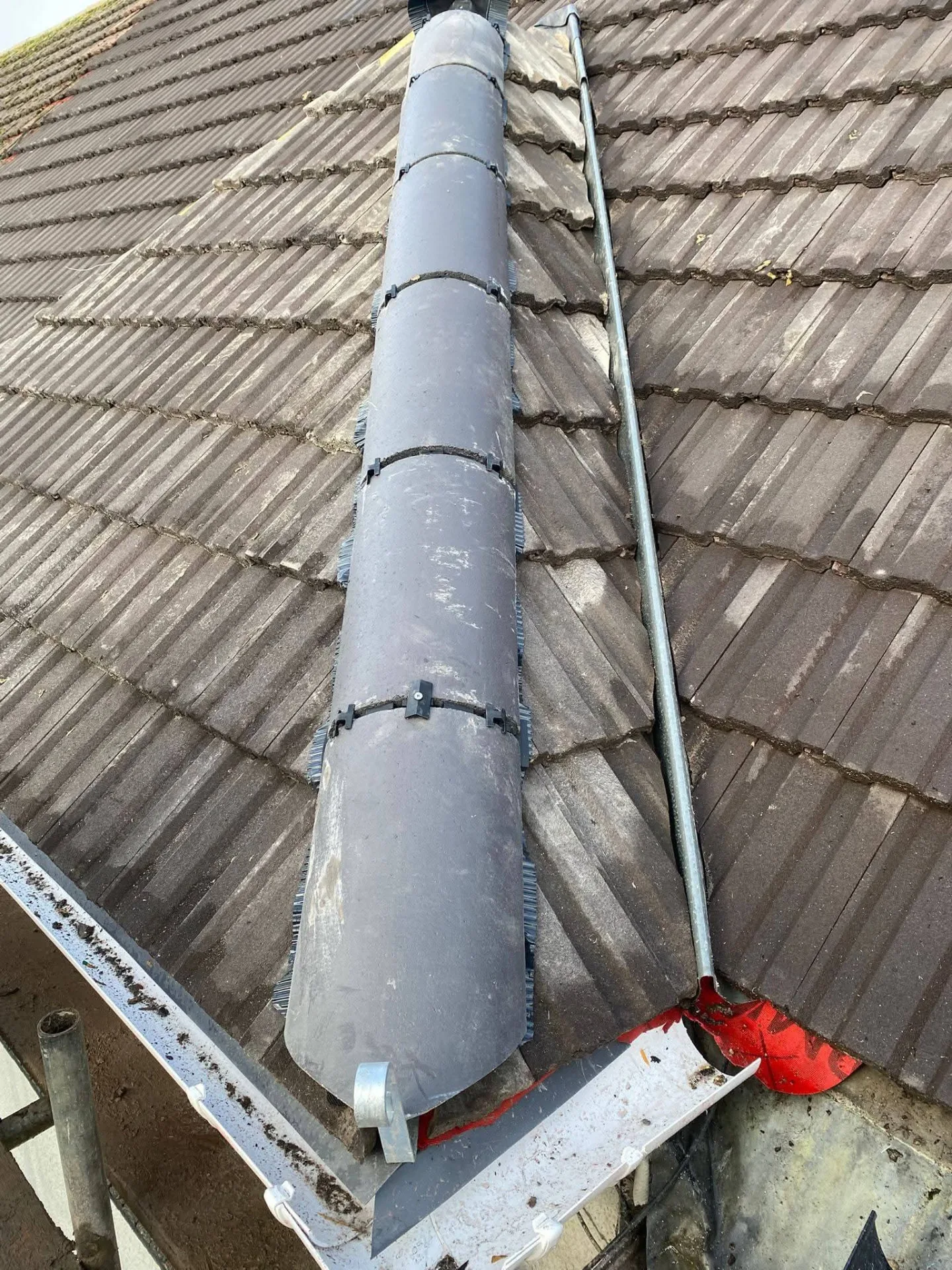
The ridge takes the worst of the weather and is the first mortar to fail. We lift loose ridge tiles, re-bed them properly and repoint, so wind and rain stop getting underneath.
Free inspection · No call-out charge for a quotation · 70+ reviews on Bark
Ridge repointing and re-bedding, what it is and when you need it
Ridge repointing and re-bedding is the renewal of the mortar that holds the ridge, hip and sometimes verge tiles in place. Loose tiles are lifted, old mortar is removed, and they are re-bedded and pointed so the line is solid again.
It is needed because sand-and-cement mortar on an exposed ridge does not last as long as the tiles it holds. Cracks appear, sections drop out, and tiles start to rock.
Done in time it is straightforward maintenance. Left too long, ridge tiles come off in a gale, which is a safety problem as much as a roofing one.
Who this is for
- Owners of roofs where mortar is visibly cracked or missing along the ridge
- Anyone who has found lumps of mortar in the gutter or on the ground
- Properties in exposed positions that catch the wind
- Homes where a ridge tile is visibly out of line
What's included
- Ridge tiles lifted, re-bedded and re-cemented
- Repointing to hips and verges where needed
- Photographs of the finished ridge line
- Guarantee confirmed in writing with your quote
The ridge is the most exposed line on the roof and the first mortar to fail. We lift loose ridge tiles, re-bed them and repoint so wind and rain stop getting underneath.
What happens if it gets left
A ridge tile weighs enough to do serious harm if it comes off a two-storey roof. That is the part of this job nobody thinks about until it happens.
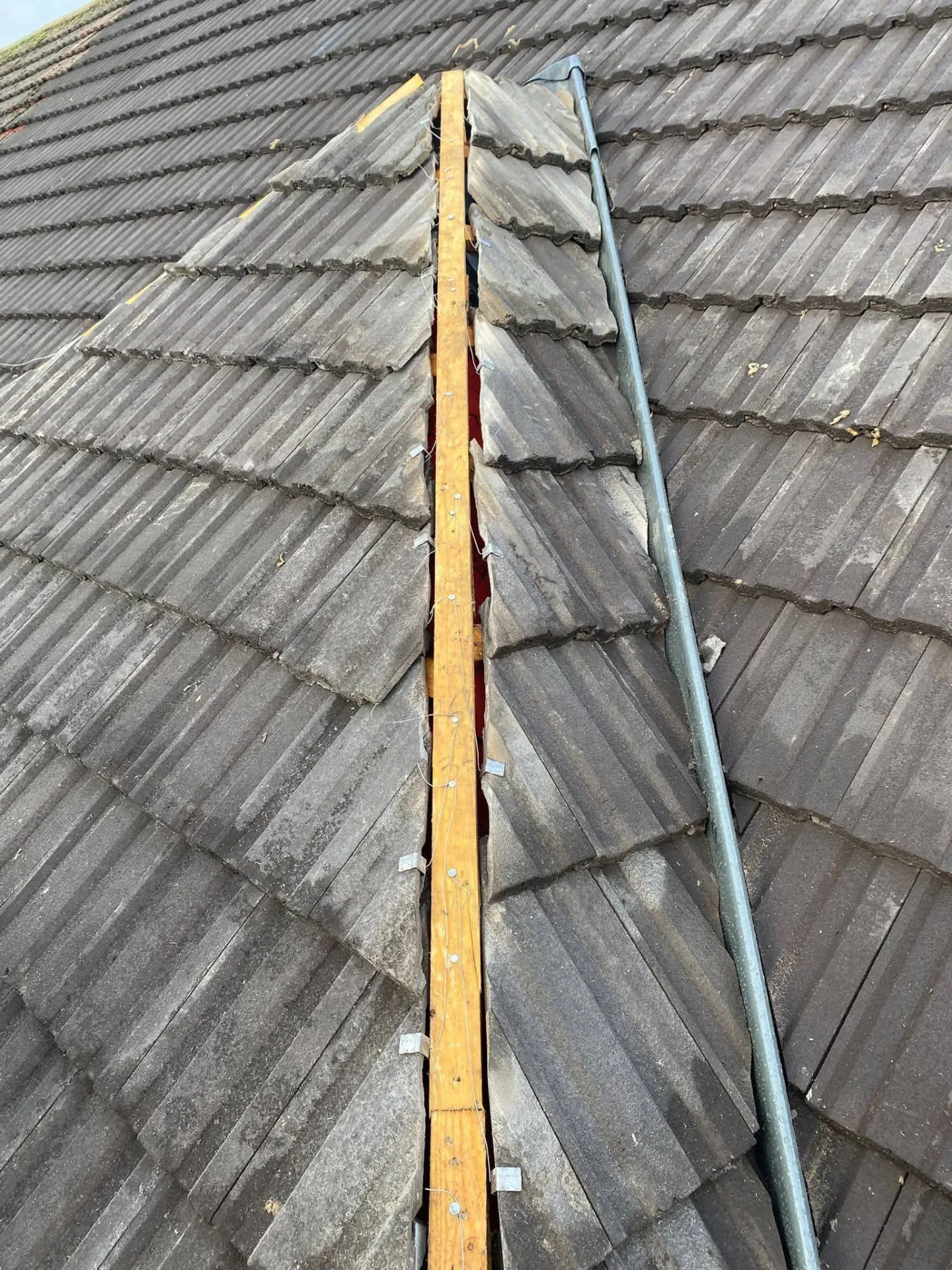
Failed ridge mortar lets wind get under the covering along the very top of the roof, which is exactly where uplift does the most damage.
Water entering at the ridge runs down inside the roof space and can appear anywhere below, which is why ridge failures often get misdiagnosed as tile problems.
Common mistakes we get called out to fix
- , Smearing new mortar over cracked old mortar, which falls off within a season
- , Re-bedding onto a dirty or wet bed so nothing bonds properly
- , Pointing the ridge and ignoring the hips, which are just as exposed
- , Waiting until a tile has actually blown off before doing anything
How the job runs, step by step
- Step 1
Free inspection
We come out, get eyes on the roof and look at it properly rather than guessing from the pavement. There is no call-out charge for a quotation.
- Step 2
Check the whole ridge line
Every ridge and hip tile is checked for movement, not just the obvious one. We look at verges at the same time since they fail for the same reasons.
- Step 3
Diagnosis and fixed price
You get told in plain terms what is wrong, what we would do about it and what it costs. The price is fixed once we have seen the job, so there are no day rates and no surprises mid-way.
- Step 4
Lift, clean and re-bed
Loose tiles lifted, old mortar removed back to a sound surface, tiles re-bedded and then pointed so the finish is weathertight rather than cosmetic.
- Step 5
Clean finish and guarantee
Rubbish goes with us the same day; you get photographs of the finished work, and the guarantee that applies to your job is confirmed in writing with the quote.
What you actually get
The most exposed line made solid
Ridge and hip tiles fixed back down properly, not skim-coated and hoped over.
Wind uplift resistance restored
Sealing the ridge stops wind getting under the covering at the top of the roof, where it does most damage.
A real safety fix
Loose ridge tiles above a path, drive or garden are dealt with before they become a falling hazard.
Stops misdiagnosed leaks
Ridge water travels a long way inside. Fixing it properly ends leaks that tile repairs never solved.
Neat, consistent finish
The whole line is finished to the same standard, so you are not left with new mortar next to crumbling old.
Photographed on completion
You get pictures of the finished ridge line, which you are unlikely to see any other way.
Ridge repointing and re-bedding in detail
Bedding versus pointing
Bedding is the mortar the tile actually sits on; pointing is the visible finish at the joint. Repointing alone is only worthwhile where the bedding is still sound, if the tile rocks it needs lifting and re-bedding, and pointing over a loose tile is wasted money.
We check each tile for movement and tell you honestly which sections need the full lift and which only need the joint made good.
Ridges, hips and verges
Hips fail for the same reasons as ridges and are often overlooked because they are harder to see from the ground. Verges, the mortar at the gable edge, are equally exposed and crack along their length.
Where the whole edge detail has gone, doing ridge, hips and verges in one visit costs far less than three separate trips with access set up each time.
Weather, timing and lifespan
Mortar needs reasonable conditions to cure. We plan this work around the weather rather than laying beds into rain or hard frost and watching them fail.
How long it lasts depends on exposure and the quality of the work underneath. Tiles that are lifted, cleaned and bedded on a sound surface behave very differently from ones that had new mortar pushed against old.
Where we work
We cover Hampshire and surrounding areas, including Hook, Basingstoke, Newbury, Southampton, Thatcham, Salisbury, Andover, Winchester, Eastleigh.
Ridge repointing and re-bedding: your questions answered
- How do I know if my ridge needs repointing?
- Look for cracks along the mortar line, gaps where sections have dropped out, mortar debris in the gutters, or a ridge tile sitting out of line. A free inspection confirms it either way.
- What does ridge repointing cost?
- It depends on the length of ridge and hips, access, and whether tiles need lifting and re-bedding or just pointing. You get one fixed price after a free inspection.
- How long does the work take?
- Most domestic ridge lines are completed in a visit or two depending on length and access. Weather can move it, because mortar needs decent conditions to cure.
- How long will it last?
- Properly lifted, cleaned and re-bedded ridge work lasts far longer than mortar smeared over a failing bed. We confirm the guarantee that applies to your job in writing with the quote.
- Do you do hips and verges too?
- Yes, and we recommend doing them at the same time where they need it, the access is already in place, so it costs less than a separate visit.
- Does a quote cost anything?
- No. Inspections and quotations are free and there is no call-out charge for a quotation, whether you go ahead with us or not.
- Are you insured?
- Yes, we carry £1 million public liability insurance, and we can confirm the details before work begins.
- How do I pay, and do you take a deposit?
- Bank transfer or cash. Some jobs need a deposit with the balance due on completion, and on larger projects we can arrange stage payments. It is all written down before anything starts.
Get your ridge repointing and re-bedding priced properly
Free inspection, a fixed price in writing, and photographs of the work when it is done. No call-out charge for a quotation.
£1m public liability insurance · 70+ reviews on Bark · Hampshire and surrounding areas