
Felt and batten
replacement across
Hampshire in Hook & surrounding areas
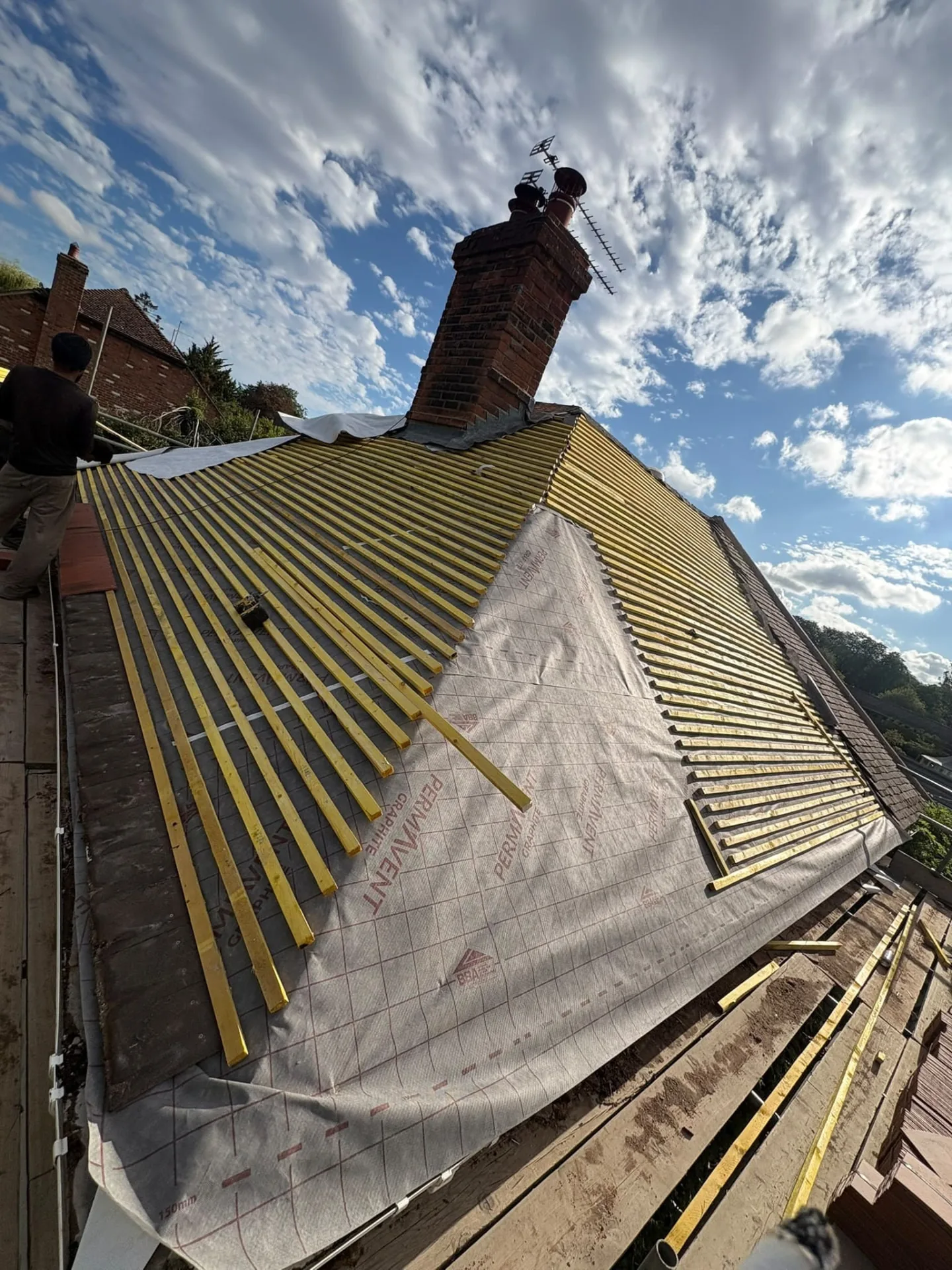
Tiles are the raincoat; felt and battens are the skin underneath. When the felt perishes, water runs straight past perfectly good tiles; re-felting rebuilds the waterproof layer without rebuilding the roof.
Free inspection · No call-out charge for a quotation · 70+ reviews on Bark
Felt and batten replacement, what it is and when you need it
Felt and batten replacement strips the covering, removes perished underlay and tired battens, fits new breathable underlay and new treated battens, then re-lays your tiles or slates where they are sound.
It is the middle option between patch repairs and a full re-roof: the visible covering has life left, but the layer doing the actual waterproofing has reached the end of its.
Older felts go brittle, tear around nail holes and sag between rafters. Once that happens, every bit of wind-driven rain that gets under a tile ends up inside the roof space.
Who this is for
- Owners of properties on original bitumen felt from decades ago
- Anyone who can see daylight, tears or sagging felt from inside the loft
- Homes with sound tiles but repeated unexplained leaks
- People weighing up a full re-roof who may not need one yet
What's included
- Old felt and battens stripped and replaced
- Existing tiles reused where they are sound
- High-quality materials, tidy site, rubbish taken away
- Guarantee confirmed in writing with your quote
Perished felt and rotten battens let water past long before the tiles fail. Re-felting and re-battening rebuilds the waterproof layer underneath without replacing the whole roof structure.
What happens if it gets left
Perished felt is invisible from the street. The roof looks fine, the loft tells a different story, and the first real evidence is usually a stain on a bedroom ceiling.
Once underlay has failed, every driven rain event soaks battens and rafters. Wet battens lose their grip on nails, tiles start slipping, and the problem compounds itself.
Waiting until tiles are falling means you are no longer choosing between re-felting and a full re-roof; the roof has chosen for you.
Common mistakes we get called out to fix
- , Patching a tear in the felt from inside the loft, which does nothing about the rest of it
- , Replacing tiles over old felt and battens, so the expensive part sits on a failed base
- , Using non-breathable felt in a poorly ventilated roof and swapping leaks for condensation
- , Skimping on batten grade or spacing to save a small amount of money
How the job runs, step by step
- Step 1
Free inspection
We come out, get eyes on the roof and look at it properly rather than guessing from the pavement. There is no call-out charge for a quotation.
- Step 2
Loft-side assessment
We look at the underlay and battens from inside where access allows, so the recommendation is based on the condition of the layers that matter, not just the tiles.
- Step 3
Diagnosis and fixed price
You get told in plain terms what is wrong, what we would do about it and what it costs. The price is fixed once we have seen the job, so there are no day rates and no surprises mid-way.
- Step 4
Strip, re-felt and re-batten
Covering carefully set aside, old felt and battens removed, new breathable underlay and treated battens fitted, then sound tiles re-laid and any broken ones replaced.
- Step 5
Clean finish and guarantee
Rubbish goes with us the same day; you get photographs of the finished work, and the guarantee that applies to your job is confirmed in writing with the quote.
What you actually get
Cheaper than a full re-roof
You keep the tiles you already own and replace only the layers that have failed.
Stops leaks at the source
A continuous new waterproof layer under the covering, not another patch on top of it.
Protects the timber
Dry battens and rafters last. Re-felting is the cheapest way to keep the structure out of trouble.
Tiles get checked as they go back
Every tile passes through our hands, so cracked ones are found and replaced rather than re-laid.
Quality materials, written down
The underlay and battens we use are specified in your quote, not left vague.
Tidy site, rubbish gone
Cleared daily and all waste taken away: the point our customers make most often in reviews.
Felt and batten replacement in detail
Breathable underlay versus old bitumen felt
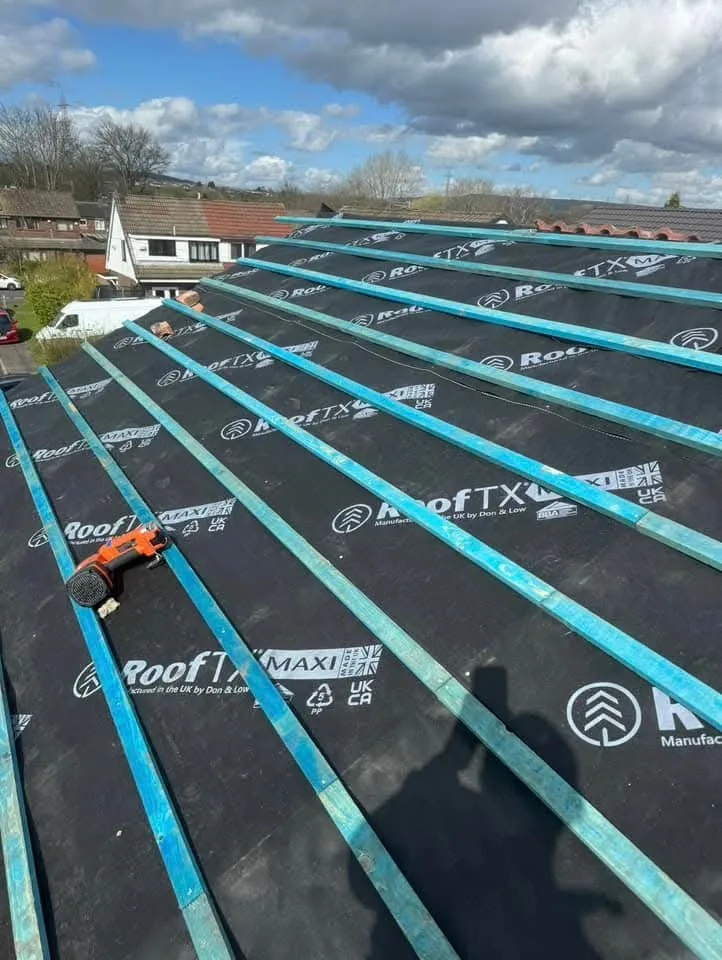
Traditional bitumen felt is not vapour permeable. In a roof with limited ventilation it traps moisture, and over decades it hardens, cracks and tears along the batten lines. Modern breathable membranes let water vapour out while keeping wind-driven rain and dust from getting in.
Which membrane suits your roof depends on pitch, existing ventilation and the covering above it. We specify it for the job rather than fitting the same roll on every house.
Battens are not just timber
Battens carry the entire covering and every fixing in it. Size and grade matter, and so does spacing, which is set by the gauge of your tile or slate rather than by habit.
Old battens are frequently undersized, split around nails, or soft from years under failed felt. Once they are off, the state of them usually explains the tiles that had been slipping.
Doing it in sections
Roofs can be re-felted a slope at a time where that suits the property or the budget. It keeps the house weathertight throughout and lets the work be phased.
Ridges, hips and verges are re-bedded and pointed as the covering goes back, so the finished roof is consistent rather than new in the middle and tired at the edges.
Where we work
We cover Hampshire and surrounding areas, including Hook, Basingstoke, Newbury, Southampton, Thatcham, Salisbury, Andover, Winchester, Eastleigh.
Felt and batten replacement: your questions answered
- How do I know if my felt has failed?
- From inside the loft you may see daylight, tears around the nails, sagging between rafters, or felt that feels brittle and crumbles when touched. Damp battens or rafters are another clear sign. We check it as part of a free inspection.
- Can felt be replaced without removing the tiles?
- Not properly. The underlay sits beneath the battens and tiles, so the covering has to come off to replace it. Anything done from inside the loft is a temporary patch, not a repair.
- Will I need new tiles as well?
- Often not. Sound tiles are set aside and re-laid; only broken ones get replaced. We tell you at inspection roughly how many are likely to need swapping.
- How long does felt and batten replacement take?
- It depends on roof size, pitch and access, and whether you are doing the whole roof or one slope. We give you a duration with the fixed price.
- Is it guaranteed?
- Guarantees vary depending on the job and the materials used, and yours is confirmed in writing with your quote. The 20-year workmanship guarantee applies to full roof replacements.
- Does a quote cost anything?
- No. Inspections and quotations are free and there is no call-out charge for a quotation, whether you go ahead with us or not.
- Are you insured?
- Yes, we carry £1 million public liability insurance, and we can confirm the details before work begins.
- How do I pay, and do you take a deposit?
- Bank transfer or cash. Some jobs need a deposit with the balance due on completion, and on larger projects we can arrange stage payments. It is all written down before anything starts.
Get your felt and batten replacement priced properly
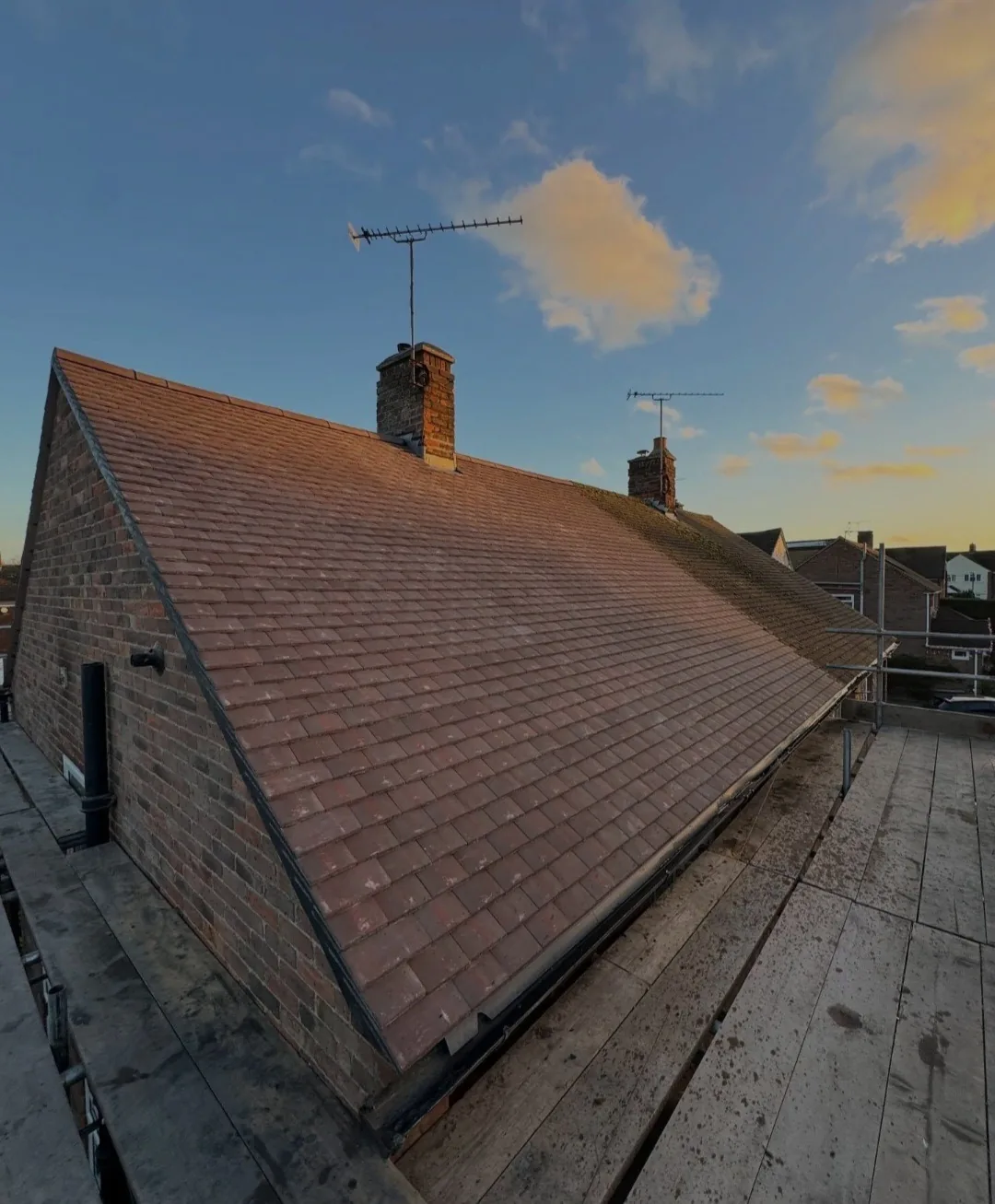
Free inspection, a fixed price in writing, and photographs of the work when it is done. No call-out charge for a quotation.
£1m public liability insurance · 70+ reviews on Bark · Hampshire and surrounding areas